Hair loss is something most people notice at some point. It can be small amounts of shedding or bigger patches that make you worry. For many, it’s more than just looks—it affects confidence and how you feel every day. Dr. Jyoti Gupta, a hair specialist, says that understanding why hair falls out and what type of hair loss you have is the first step to fixing it.
Common Types of Hair Loss
Hair loss doesn’t look the same for everyone. Some people lose hair in spots, others notice thinning all over. Here are the types you should know:
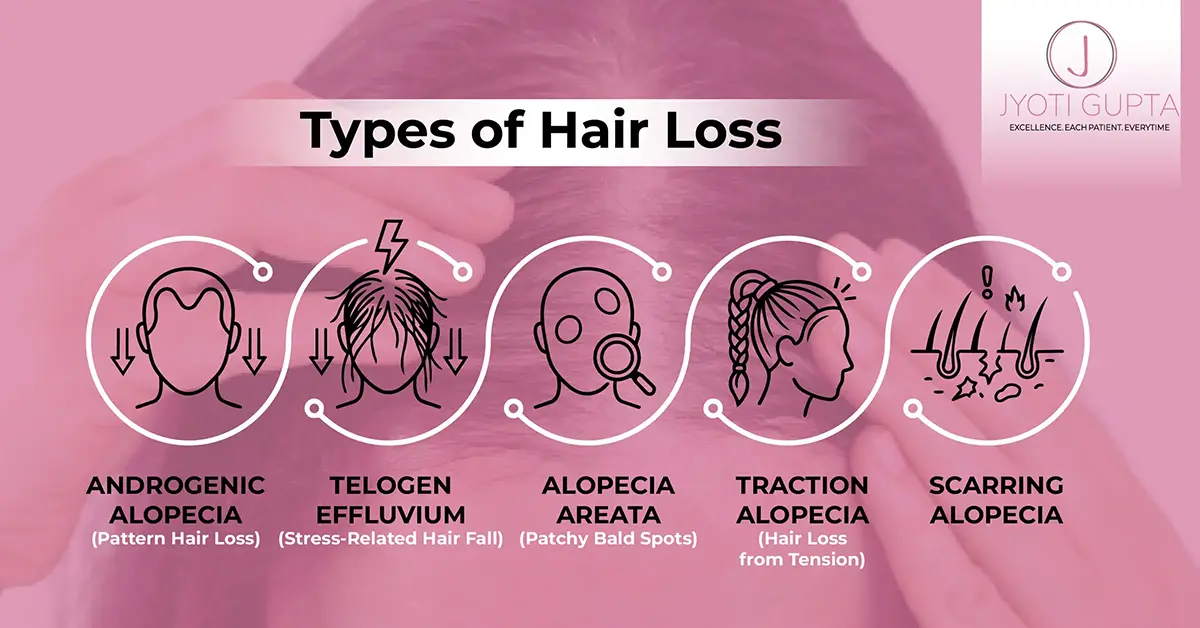
Androgenic Alopecia (Pattern Hair Loss)
This is the one most people think of when they hear “balding.” It’s caused by genetics and hormones. Men often see a receding hairline or bald spot on the crown. Women usually notice thinning hair all over the scalp. Treatments like minoxidil, certain medicines, or PRP therapy can help slow it down and even regrow some hair.
Telogen Effluvium (Stress-Related Hair Fall)
Sometimes hair fall happens because of stress, illness, surgery, or big changes in hormones—like after pregnancy. Hair falls in larger amounts than usual but often comes back once your body recovers. Dr. Jyoti Gupta recommends checking recent stressors, diet, and health issues to manage this type of hair loss.
Alopecia Areata (Patchy Bald Spots)
Alopecia areata causes round bald spots and happens when the immune system attacks hair follicles. It can appear quickly and affect anyone. Hair sometimes grows back on its own, but treatments like injections or special creams can help the hair come back faster.
Traction Alopecia (Hair Loss from Tension)
Pulling your hair too tight over long periods—like in tight braids, ponytails, or extensions—can cause traction alopecia. It weakens the hair roots and can cause permanent thinning if not fixed. Switching to loose hairstyles and gentle hair care helps prevent this.
Scarring Alopecia
This type is less common but serious. Scarring alopecia destroys hair follicles and replaces them with scar tissue.. It can come from skin conditions, infections, or injuries. Once follicles are gone, hair won’t grow back, so early action is important.
Other Causes of Hair Loss
Other times, hair fall comes from nutrition problems, thyroid issues, medications, or chronic illnesses. Women often notice thinning across the scalp, while men usually see bald spots or receding lines. Dr. Jyoti Gupta says a proper scalp check and some lab tests help find the real reason and the right treatment.
How to Take Care of Hair Loss
The first step is knowing what type of hair loss you have. Depending on that, treatments can range from lotions, medicines, PRP therapy, steroid injections, or even hair transplants. Simple habits like eating well, reducing stress, and using gentle shampoos can also make a big difference.
FAQs
Q1: Why is my hair falling out so much?
A1: Hair fall happens because of stress, hormones, genetics, poor diet, or certain health conditions. The pattern tells a lot about the cause.
Q2: Can hair grow back after a bald spot?
A2: Yes, in many cases like telogen effluvium or alopecia areata, hair can regrow with time or treatment.
Q3: Do men and women lose hair differently?
A3: Men usually get bald spots or receding hairlines. Women mostly notice thinning all over the scalp.
Q4: Is hair loss permanent?
A4: Some types like pattern baldness or scarring alopecia can be permanent. Others, like stress-related hair fall, usually recover.
Q5: What works best for hair loss?
A5: Treatments depend on the cause. Options include topical solutions, oral medicines, PRP therapy, gentle hair care, and sometimes hair transplant procedures.