Skin peeling is something most people notice at some point. The skin may look dry, rough, cracked, or start coming off in small flakes. Sometimes it happens after spending too much time in the sun. In other cases, a new soap, face wash, cream, medicine, or skin problem may be behind it.
A little flaking due to dry skin often settles with basic care. But peeling that keeps coming back, is associated with itching or pain, or appears with redness and blisters needs more attention. The right skin peeling treatment begins with understanding why the skin is peeling in the first place.
What Causes Skin Peeling? Common Causes & Treatments for Dry, Flaky Skin
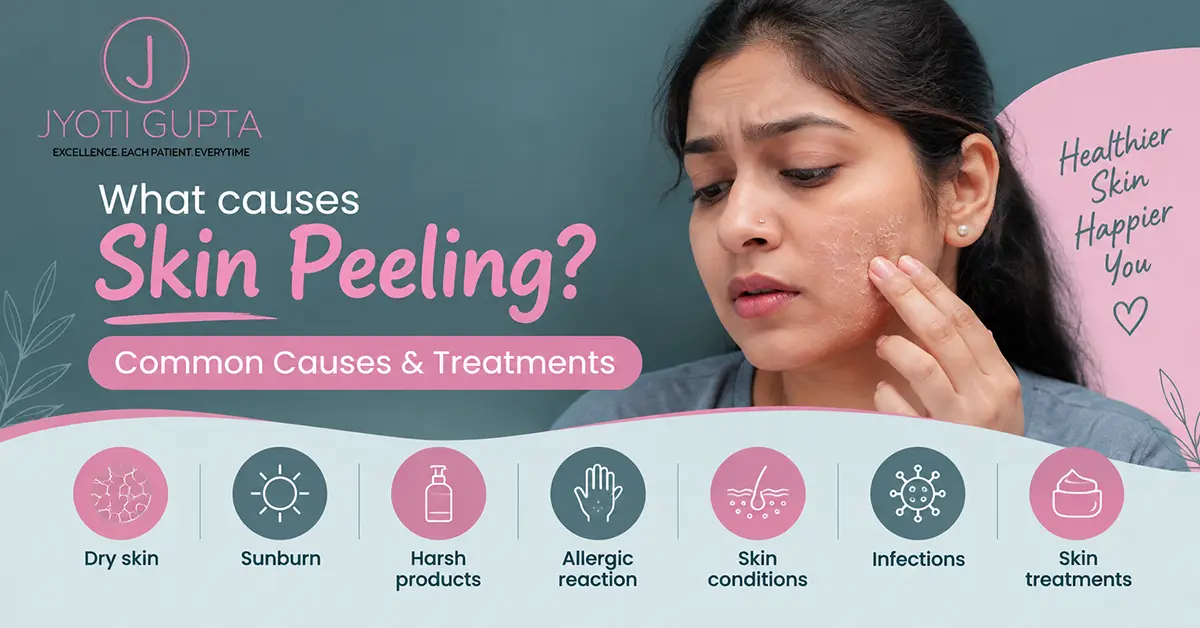
So, what causes skin peeling? Your skin naturally sheds old cells, but this process is usually hard to notice. When the outer skin becomes very dry, irritated, inflamed, or damaged, it may come off in visible flakes or thin layers.
Some common reasons are:
- Dry skin: Lack of moisture can make the skin tight, rough, and flaky.
- Sunburn: Too much sun can damage the outer skin, which later starts peeling.
- Harsh products: Strong soaps, scrubs, acids, and some skincare products can irritate the skin.
- Allergic reaction: Certain creams, perfumes, metals, or chemicals may cause itching and peeling.
- Skin conditions: Eczema, psoriasis, and other Skin Diseases may cause dry and scaly patches.
- Infections: Fungal and some bacterial infections can also lead to peeling.
- Skin treatments: Retinoids, chemical peels, and acne products may cause temporary dryness or peeling.
The cause can differ from person to person. That is why treating every peeling problem with the same cream may not work.
Why Does Skin Flaking Happen?
Flaking often starts when the skin becomes too dry. Weather changes, long hot showers, air conditioning, repeated washing, and harsh cleansers can remove natural oils from the skin.
Your skincare routine can also play a part. Using a scrub, retinol, salicylic acid, and other strong products together may leave the face dry and sore.
People who are interested in Skin Rejuvenation should tell their dermatologist about any active peeling before starting a procedure. When the skin is already irritated, giving it time to settle may be better than adding another product or treatment.
Peeling Sunburn: How to Care for Your Skin
A peeling sunburn can start a few days after spending too much time in direct sunlight. The skin may first become red, hot, or painful and then begin to peel.
Do not pull the loose skin with your fingers. Let it come off on its own. Take cool or lukewarm showers and apply a gentle moisturiser. Stay away from scrubs and strong skincare products while the area heals.
Some people also find Dark Spot & Pigmentation more obvious due to the sun. Using sunscreen regularly helps protect healing skin from more sun damage.
Why Is the Skin on My Fingers Peeling?
If you are searching why is the skin on my fingers peeling, start by looking at what your hands come in contact with every day.
Frequent handwashing is one common reason. Hand sanitiser, dishwashing liquid, cleaning chemicals, cold weather, and repeated contact with water can also dry the fingers.
The same reasons may answer the common question, why are my hands peeling?
Wear gloves while cleaning or washing dishes and apply moisturiser after washing your hands. If the peeling comes with deep cracks, burning, itching, swelling, or small blisters, see a dermatologist. Eczema, an allergy, or another skin problem could be involved.
Can Acne and Skin Care Products Cause Peeling?
Yes. Sometimes, products used for Acne & Scar care can cause dryness and peeling. Retinoids, benzoyl peroxide, salicylic acid, and exfoliating acids may irritate the skin when used too often.
Using more product does not mean acne will clear faster. It may simply leave the face red, dry, and uncomfortable.
Dr Jyoti Gupta can check the skin, current skincare routine, acne type, and areas of peeling before advising what to stop, continue, or change. This can be especially useful when peeling starts after adding a new acne product.
Skin Peeling Treatment at Home
For mild dryness or irritation, simple changes may help. You do not need a long skincare routine while your skin is peeling.
Try these steps:
- Wash the area with lukewarm water.
- Choose a mild, fragrance-free cleanser.
- Apply moisturiser after washing.
- Avoid scratching or pulling loose skin.
- Stop harsh scrubs for a few days.
- Wear sunscreen before going outdoors.
- Avoid using several strong skincare products together.
If a medical problem is causing the peeling, home care alone may not solve it. Eczema, fungal infections, allergies, and other conditions may need medicines prescribed according to the cause.
What About Cosmetic Treatments When Skin Is Peeling?
Peeling skin needs to settle before many cosmetic procedures are considered. Treatments such as Permanent Makeup for Skin (BB Glow) and Permanent Makeup for Eyebrows involve working directly on or around the skin. Active redness, irritation, or peeling should therefore be checked first.
The same applies if you are planning Laser Skin Tightening or another facial procedure. Tell your doctor about recent sunburn, new skincare products, allergies, or medicines before treatment.
Procedures such as Botox Treatment and Fillers Treatment have different uses and do not treat peeling skin itself. If peeling is the main concern, finding its cause comes first.
Can Anti-Aging Products Make Skin Peel?
Some products used in Anti aging Treatment contain retinoids or exfoliating ingredients. These may make the skin dry or flaky, mainly when someone starts using them too frequently.
Introduce new products as recommended and see how your skin reacts. If you experience burning, severe redness, swelling or persistent peeling, stop testing with more products and see a dermatologist.
When Should You See a Dermatologist?
Dry skin from time to time is normal, but never ignore constant peeling. If the peeling persists for several days, recurs, spreads to other parts or is painful, book a skin check.
You must see a medical professional if you notice bleeding, pus, swelling, severe itching, blisters, fever or open cracks. A dermatologist can figure out the cause and prescribe treatment that fits what your skin really needs.
FAQs
1. What causes skin peeling?
Dryness, sunburn, irritation, allergies, infections, and some skin conditions can cause it.
2. Why are my hands peeling?
Frequent washing, sanitiser, detergents, dry weather, or eczema may cause hand peeling.
3. Should I pull peeling skin off?
No. Let loose skin fall away naturally.
4. What helps with skin flaking?
A mild cleanser, moisturiser, and avoiding harsh products may help mild flaking.
5. Can sunburn cause skin peeling?
Yes. Damaged skin may start peeling a few days after sunburn.